I heard screaming and shouting from the other students through her screen. The usually soft-spoken art teacher was screeching: “We are not having this discussion right now! We are not having this discussion!” She repeated it over and over, with panic in her voice, trying to drown out the pandemonium that had become her second-grade online art class. It sounded as if she was losing her mind!
I was so shocked and seemed rooted to the ground. It took me a few seconds to realize what was going on and decide I needed to act. Finally, as if I were in slow motion, I jumped out of my seat and leapt to my daughter’s side of the table.
How can a pleasant and engaging art lesson about a barn turn into total chaos?
We were still in the heart of the pandemic. Remote learning was in full swing. We had survived year one and were almost at the end of year two. At my house, the dining room table was my workstation of choice as well as for my youngest one. Not that she needed much help, but unlike her older sister, who I felt did not need supervision, I wanted to keep an eye on her and ensure she stayed focused and on task. Having been in the classroom for many years myself, I knew the teacher could use all the help she could get when dealing with a group of 7 and 8-year-olds, especially with art supplies involved.
Photo by Alexander Gordon via Unsplash
I was passively listening while doing my work on my side. I had forgotten how refreshing specials in elementary school can be. The art teacher showed the class a beautifully executed model of a colorful barn. She then walked her students through the steps of the assignment as she answered various questions.
“Do we have to draw the window in the room to the right or the left?” a student asked.
“Should we color the doors white?” another one inquired.
“Maybe black would work better for the windows?” chimed in another student.
Even my daughter stated her windows would be orange. “What color should the roof be?”…
I learned that day that most barns are painted red because farmers wanting to save money, made their own sealant and paint using linseed oil and rust. While students sketched and colored, the interesting questions went on until someone asked if they could add another room where the animals could be “castrated.”
“What is castrated?” asked another inquisitive little voice. Someone else shouted: “It’s when they take the animals…” The deafening anarchy exploded via the Chromebook’s speakers. Everyone was screaming to be heard, and the teacher’s voice was the loudest. “We are not having this discussion right now!”
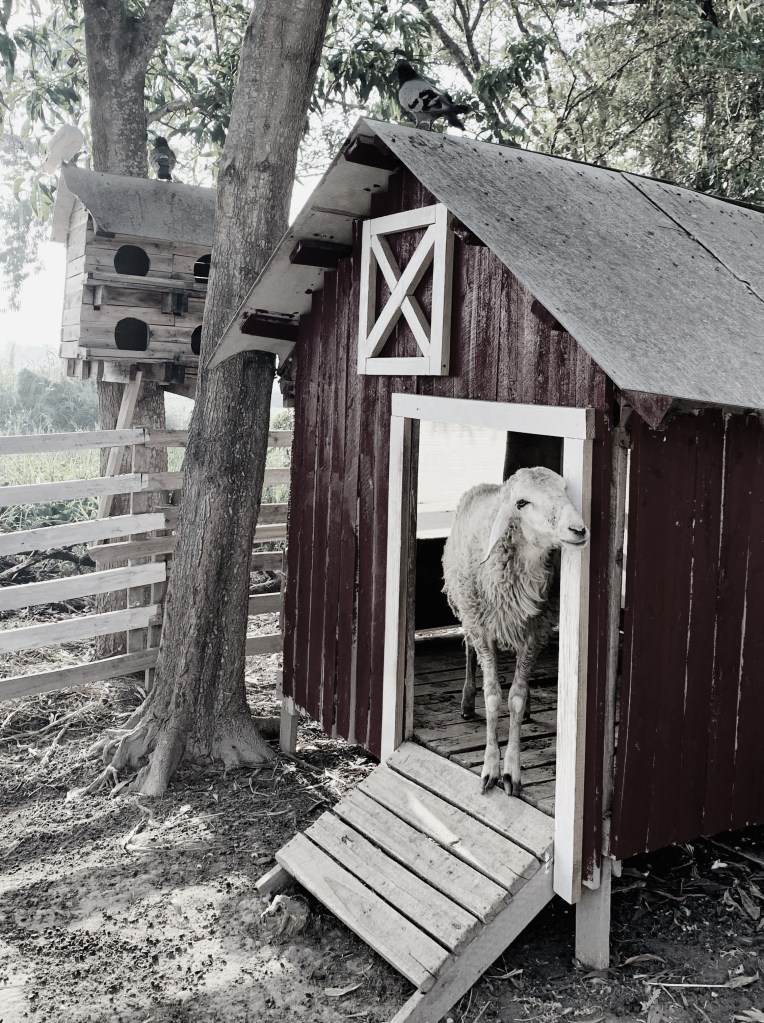
Photo by Thuy Nguyen Unsplash
I finally understood why she was screaming and trying to prevent this conversation; the 2nd-grade class was determined to have. The poor art teacher was not trying to be the one to facilitate such a discussion.
Standing next to my daughter as things finally started to register, I could see several other parents suddenly appearing next to their children. They were, for the most part, looking at the camera with puzzled looks on their faces as if asking: “What in the world is going on?”
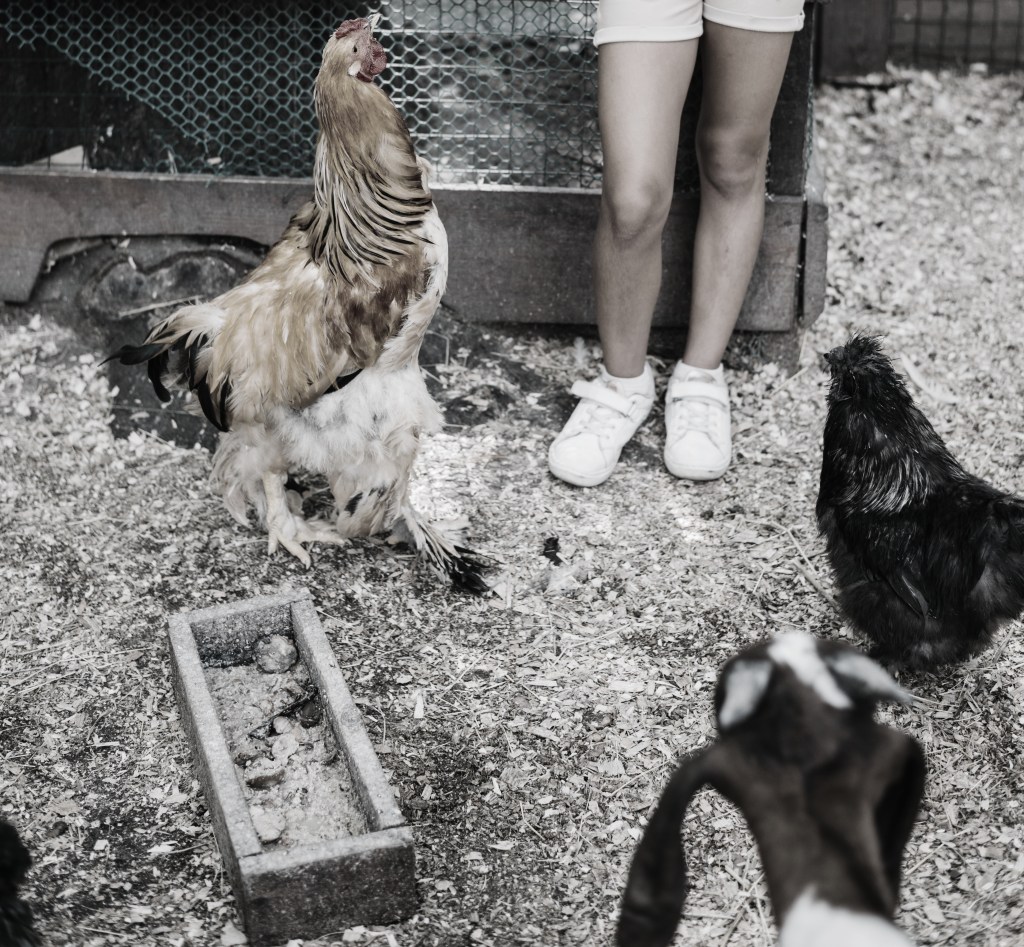
Photo by freepik
The teacher’s vehement protests prevailed; the fascinating conversation about what happens to the animals at the barn was dropped, and the art lesson resumed.
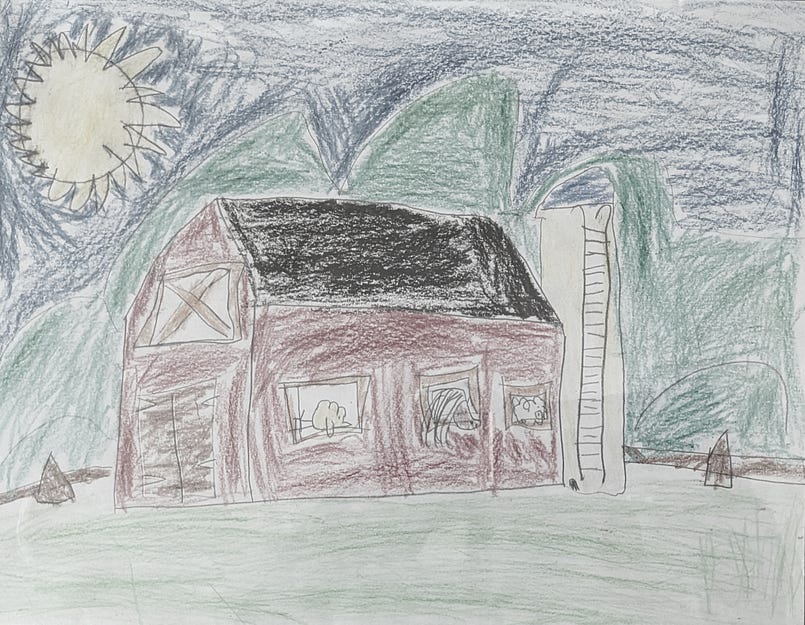
Photo by T. DeRose
More than once, I find myself smiling when I enter my kitchen. You see, taped to the fridge door, there is a beautiful illustration of a red barn with a black roof and orange wire-framed windows. It is laminated for posterity, and like me, those who know this story chuckle every time they see it.